



HEK293 Expressed Full Length CD20 Proteins
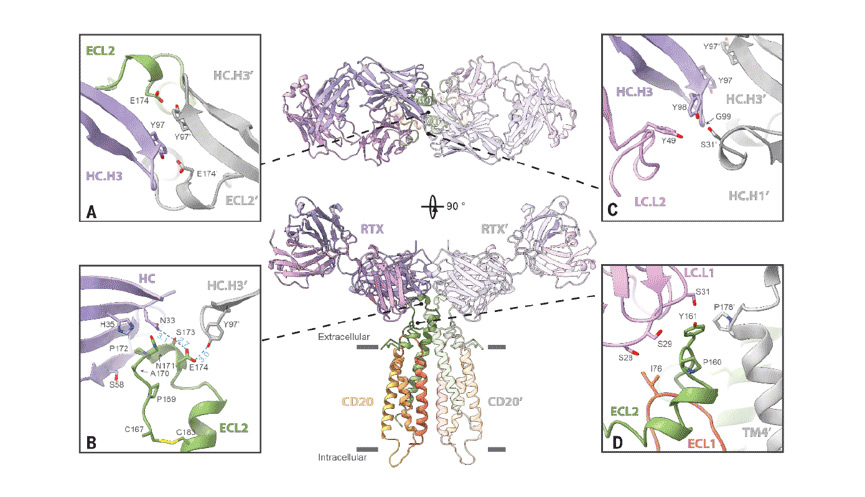
DOI: 10.1126/science.aaz9356
Interaction Between CD20 and the Critical Molecular Determinants of Rituximab (RTX)
CD20 is a tetraspan membrane protein selectively expressed on the surface of B cells. It is composed of 297 amino acids with an apparent molecular weight of roughly 33–37 kDa. As a key regulator of B-cell development and function, CD20 is highly expressed on more than 95% of B-cell lymphomas, making it a “gold-standard” therapeutic target in B-cell malignancies and autoimmune disorders.
Structurally, CD20 contains four transmembrane domains that form two extracellular loops (ECL1 and ECL2). Studies have shown that rituximab (RTX) exerts its immune-mediated killing primarily by engaging a dominant epitope within ECL2, while ECL1 contributes indirectly by stabilizing the protein’s conformation and supporting secondary interactions. The integrity of these epitope structures directly influences antibody affinity and complement-dependent cytotoxicity. As a result, using full-length CD20 with a native conformation is essential throughout drug discovery and development.
Leveraging multi-pass transmembrane protein development platform—Full Length Active Gallery—we have successfully developed full-length CD20 proteins,with high bioactivity across ELISA, BLI, SPR, and cell-based assays, enabling robust candidate screening and mechanism exploration. We also provide CD20 stable cell lines and comprehensive SPR/BLI interaction analysis services to further accelerate therapeutic development and regulatory submission.
Different Types of CD20 Proteins

The VLP (virus-like particle) platform clusters full-length, correctly folded membrane proteins on the surface of producer cells, converting these otherwise challenging multispan targets into soluble, high-concentration immunogens for antibody generation and screening. The resulting enveloped VLPs present native, properly folded multipass membrane proteins within their original lipid membrane, enabling the induction and selection of functional antibodies that recognize the target in its natural physiological conformation.

Multi-pass transmembrane proteins are highly hydrophobic within their transmembrane domains and therefore struggle to maintain their native conformation in standard aqueous buffers. To address this, we established a dedicated detergent-based platform built on both insect and mammalian expression systems. Through systematic screening, we identified a set of high-performance detergents—including our optimized Detergent formulations—that substantially improve target protein solubility and preserve correct folding in solution.
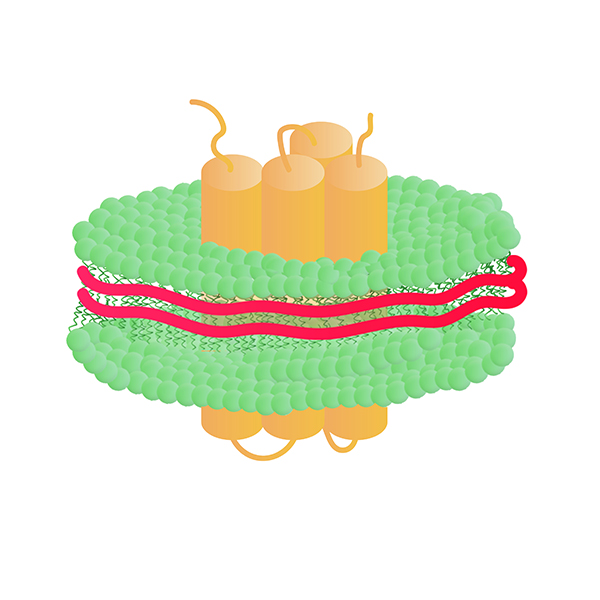
Nanodiscs are phospholipid bilayer structures assembled from membrane scaffold proteins (MSPs) and defined phospholipids. This format recreates a near-native membrane environment while incorporating membrane proteins in a way that preserves their biological activity and maintains excellent solubility, substantially broadening their utility across downstream applications. We hold official patent authorization for this technology, ensuring your R&D programs advance on a secure and fully compliant technical path.

The "Nanodisc-pro" technology platform employs an innovative scaffold in-situ assembly strategy that directly encircles target proteins along with their closely associated native phospholipids in a natural membrane environment, forming a stable phospholipid bilayer structure. By eliminating the disruptive detergent stripping and reconstitution steps required by traditional methods, this approach effectively preserves the native conformation and biological activity of transmembrane proteins.
 Order
OrderProduct Features
Full length CD20 protein has a complete conformation with both small and big loops.

The bioactivity of full length CD20 protein was verified by FACS/ELISA/ SPR and the protocols are offered.

2e5 of CD20-CAR-293 cells transfected with anti-CD20-scFv were stained with 100 μL of 3 μg/mL of Biotinylated Human CD20 Full Length, His,Avitag (Cat. No. CD0-H82E3) and negative control protein respectively, washed and then followed by PE-SA and analyzed with FACS (QC tested).

2e5 of CD20-CAR-293 cells transfected with anti-CD20-scFv were stained with 100 μL of 3 μg/mL of Human CD20 / MS4A1 Full Length Protein, His Tag (Nanodisc) (HEK293)(Cat. No. CD0-H52H1) and negative control protein respectively, washed and then followed by PE anti-His antibody and analyzed with FACS (QC tested).

Immobilized Rituximab biosimilar at 5 μg/mL (100 μL/well) can bind Biotinylated Human CD20 Full Length, His,Avitag (Cat. No. CD0-H82E3) with a linear range of 2-62.5 ng/mL (QC tested).

Immobilized Rituximab at 2 μg/mL (100 μL/well) can bind Human CD20 Full Length, His Tag (Cat. No. CD0-H52H1) with a linear range of 1-63 ng/mL (QC tested).

Immobilized Ofatumumab at 2 μg/mL (100 μL/well) can bind Biotinylated Human CD20 Full Length, His,Avitag (Cat. No. CD0-H82E5) with a linear range of 4-63 ng/mL (in presence of DDM and CHS) (QC tested).

Immobilized Human CD20 Full Length Protein, His Tag (Cat. No. CD0-H52H3) at 5 μg/mL (100 μL/well) can bind Biosimilar of Obinutuzumab with a linear range of 0.3-5 ng/mL (Routinely tested).


Biotinylated Human CD20, His,Avitag (HEK293) (Cat. No. CD0-H82E5) captured on Biotin CAP-Series S Sensor Chip can bind RTX with an affinity constant of 1.73 nM as determined in a SPR assay (in presence of DDM and CHS) (Biacore T200).

Human CD20 Full Length, His Tag, HEK293 (SPR verified) (Cat. No. CD0-H52H3) captured on CM5 chip via Anti-human IgG Fc antibodies surface can bind RTX with an affinity constant of 6.21 nM as determined in a SPR assay (in presence of DDM and CHS) (Biacore 8K).
FAQ
Why does CD20 remain a gold-standard lineage marker and therapeutic target for B-cell malignancies and autoimmune disorders?
What strategies are recommended to eliminate nonspecific antibody background arising from VLP, detergent, and nanodisc preparations used for CD20 immunization?
What advanced biochemical platforms are required to preserve the native tetrameric conformation of CD20 during antibody screening?
How do therapeutic anti-CD20 antibodies achieve B-cell depletion through distinct mechanisms of action?
What therapeutic modalities targeting CD20 have demonstrated clinical efficacy in treating B-cell malignancies and autoimmune disorders?
- Background
- Different Types of CD20 Proteins
- Product List
- Product Features
- FAQ