



CMC Production Process of iPSC-based Cell Therapy
Culture and Expansion of iPSCs
Product List
 GMP Human Laminin 521 Protein Hot
GMP Human Laminin 511 Protein Hot

Product Features
 Performance - facilitate rapid expansion of hPSC and support efficient differentiation into a diverse array of specialized cell types.
Better Adhesion - maintain good adhesion characteristics at a concentration as low as 2μg/ml.
Stemness Maintenance - no spontaneous differentiation is observed after several passages of hPSC culture.
Lot-to-Lot Consistency - produced from a stable cell line, robust purification process, stringent QC.
Ready to Scale-up Supply - cGMP-compliant facility.
Supporting large-scale clinical supply - strictly adhere to the GMP management system, support multiple national regulations, and ensure stable supply for production.
Validation Data

Laminin 521 (Cat. No. GMP-LA5H24) effectively maintains the expansion of human iPSCs.

Laminin 521 (Cat. No. GMP-LA5H24) could maintain the stemness of iPSC after several passages

Normal karyotype (46, XX) was found in hiPSCs with Laminin 521(Cat. No. GMP-LA5H24) coating after 10 passages.

GMP Human Laminin 511 Protein (Cat. No. GMP-LA1H25) and Human Laminin 511 Protein, premium grade (Cat. No. LA8-H5283L) could maintain the stemness of iPSC at least Passage 5 and has similar performance. FACS data indicated that the iPSCs expressed high levels of pluripotency associated markers OCT4, SOX2, and SSEA4.

GMP Human Laminin 511 Protein (Cat. No. GMP-LA1H25) and Human Laminin 511 Protein, premium grade (Cat. No. LA8-H5283L) could maintain the stemness of iPSC at least Passage 5 and have similar performance. Immunofluorescence staining indicated that the iPSCs expressed high levels of pluripotency associated markers OCT4, SOX2, and NANOG.

FGF basic (Cat. No. GMP-FGCH17) could highly support stemness maintenance in ESC/iPSC compared to other companies.

GMP Human FGF basic Protein (Cat. No. GMP-FGCH17) and GMP Human TGF-Beta 1 Protein (Cat. No. GMP-TG1H25) could maintain the stemness of hiPSCs with high expression of stem cell genes OCT4, SOX2, and SSEA4 with GMP Human Laminin 521 Protein (Cat. No. GMP-LA5H24).
Related Product Recommended for you
Genome Editing of iPSCs
Product List
Product Features
High purity, high enzyme activity, high cleavage efficiency
Possesses nuclear localization signals to enhance editing efficiency
Aseptic, ultra-low endotoxin
Produced in GMP-compliant facilities and undergoes QC testing
Validation Data

Different amounts of Cas9 were incubated with the same amount of excess gRNA and plasmid for 60 minutes at 37°C. When using 400-200 ng Acro Cas9, the cutting efficiency is greater than 90%. In comparison, when using a 200 ng Company T, the cutting efficiency is only about 50%.
Related Product Recommended for you
Induced Differentiation of iPSCs
- iPSC-T Cell
- iPSC-NK Cell
- iPSC-Neuron Cell
- iPSC-Islet Cell
iPSC-T Cell

Product List GMP Available

Product Features
 GMP Grade DLL4, VCAM1:Eliminate the need of feeder cells in culture systems and support differentiation to T cells
GMP Grade BMP-4: Significantly inducing iPSC derived HSPC differentiation during the process of iPSC differentiation into T/NK cells
Validated activity by iPSC to T cell differentiation
Production and quality control are carried out under strict GMP systems and comply with regulations from multiple countries
Comprehensive quality release verification, with 16 quality control indicators
Enhanced safety (sterile, no mycoplasma, no exogenous virus, animal free production system, and various impurities residual detection)
Pharmaceutical-grade production facility
Support for online and offline audits
Completion of FDA Drug Master File (DMF) registration
Validation Data

BMP4 (Cat. No. GMP-BM4H36), VEGF (Cat. No. GMP-VE5H23), SCF (Cat. No. GMP-SCFH25), TPO(Cat. No. GMP-THNH25) and FGF basic (Cat. No. GMP-FGCH17) could significantly induce iPSC derived HSPC differentiation, with high expression of CD34 and CD45 (HSPC markers) by flow cytometry analysis.

CD34+ CD45+ hematopoietic cells were seeded on GMP Human DLL4 Protein, Fc Tag (Flagship) (Cat. No. GMP-DL4H27) and GMP Human VCAM-1 Protein, Fc Tag (Cat. No. GMP-VC1H25) coated plates and differentiated for 14 days, then flow cytometry was used to detect the expression of T-cell progenitor markers, CD5 and CD7.
GMP Human DLL4 Protein, Fc Tag (Flagship) (Cat. No. GMP-DL4H27) and GMP Human VCAM-1 Protein, Fc Tag (Cat. No. GMP-VC1H25) together with other growth factors could induce the high percentage of CD7+ and CD5+ CD7+ T-cell progenitors formation.
iPSC-NK Cell

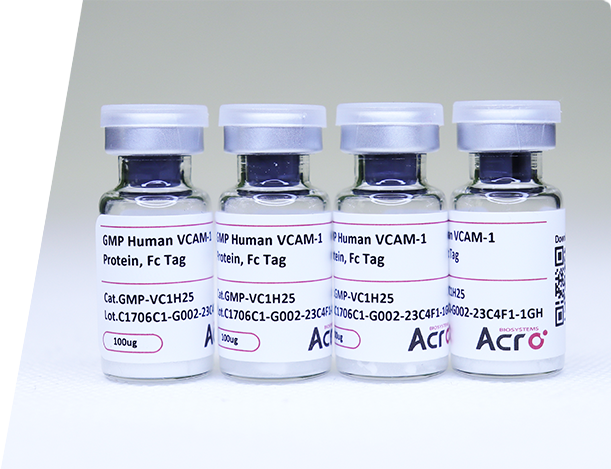
Product List GMP Available
Product Features
GMP Grade DLL4, VCAM1:Eliminate the need of feeder cells in culture systems and support differentiation to NK cells
GMP Grade BMP-4: Significantly inducing iPSC derived HSPC differentiation during the process of iPSC differentiation into T/NK cells
Validated activity by iPSC to NK cell differentiation
Production and quality control are carried out under strict GMP systems and comply with regulations from multiple countries
Comprehensive quality release verification, with 16 quality control indicators
Enhanced safety (sterile, no mycoplasma, no exogenous virus, animal free production system, and various impurities residual detection)
Pharmaceutical-grade production facility
Support for online and offline audits
Completion of FDA Drug Master File (DMF) registration
Validation Data
BMP4 (Cat. No. GMP-BM4H36), VEGF (Cat. No. GMP-VE5H23), SCF (Cat. No. GMP-SCFH25), TPO(Cat. No. GMP-THNH25) and FGF basic (Cat. No. GMP-FGCH17) could significantly induce iPSC derived HSPC differentiation, with high expression of CD34 and CD45 (HSPC markers) by flow cytometry analysis.
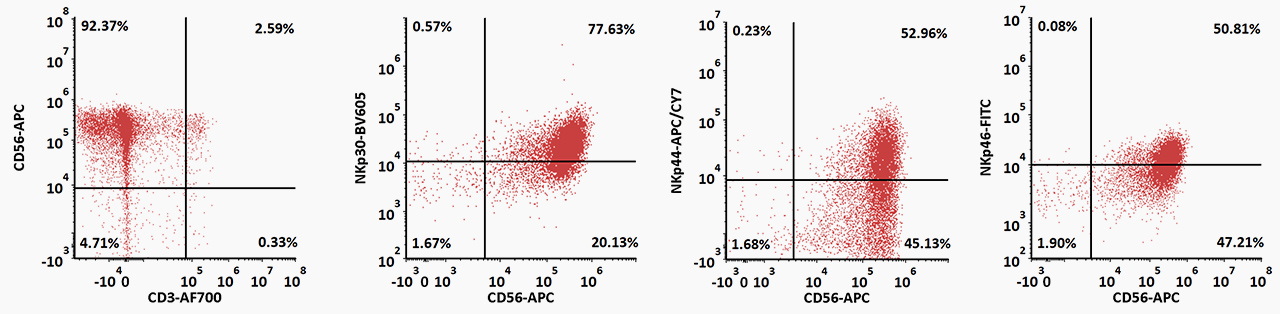
CD34+ CD45+ hematopoietic cells were seeded on GMP Human DLL4 Protein, Fc Tag (Cat. No. GMP-DL4H27) coated plates and differentiated for 14 days. Followed by 6 days of culture on non-coated plates to generate CD3-CD56+ NK Cells. Cells were harvested and analyzed for CD3, CD56, CD16, NKp30, NKp44 and NKp46 expression by flow cytometry.
GMP Human DLL4 Protein, Fc Tag (Flagship) (Cat. No. GMP-DL4H27) coating on the plate could efficiently induce hematopoietic stem cells differentiation to NK cells, with high expression of CD56+ NKp30 +, NKp44 +, NKp46 + CD3- .
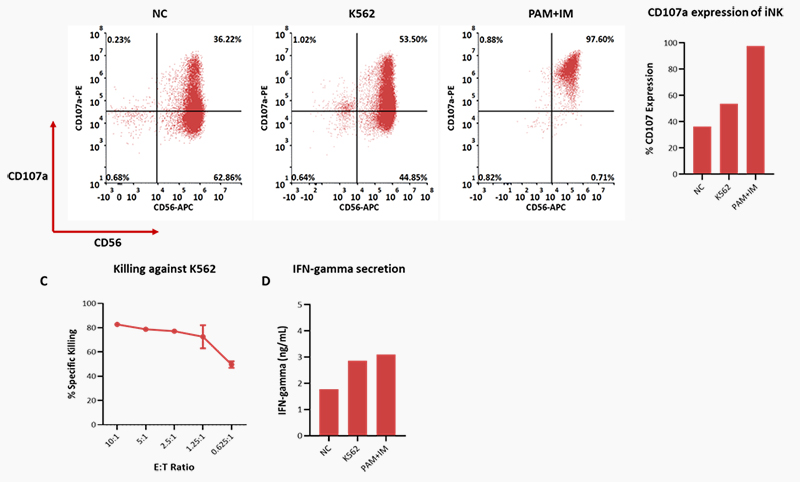
Cytotoxicity, Degranulation marker expression and cytokine production of iNK cells after exposure to K562 cells. (A, B) degranulation marker CD107a in iNK cells after coculture with K562 cells detected by flow cytometry. (C) Cytolysis of K562 cells was done with 7-AAD/CFSE staining and tested by flow cytometry. Spontaneous death of target cells has been subtracted from all plots. (D) IFN-γ secreted by iNK cells after exposure to K562 were quantified through ELISA assay.
iPSC-Neuron Cell

Product List GMP Available
Product Features
GMP Grade FGF-8b & SHH: Efficiently induce the neuron progenitor cell into dopaminergic neurons differentiation
Validated activity by iPSC to neuron cell differentiation
Animal free production system and various impurities residual detection
Sterile, no mycoplasma, no exogenous virus
High batch-to-batch consistency and stability
Support for online and offline audits
Validation Data
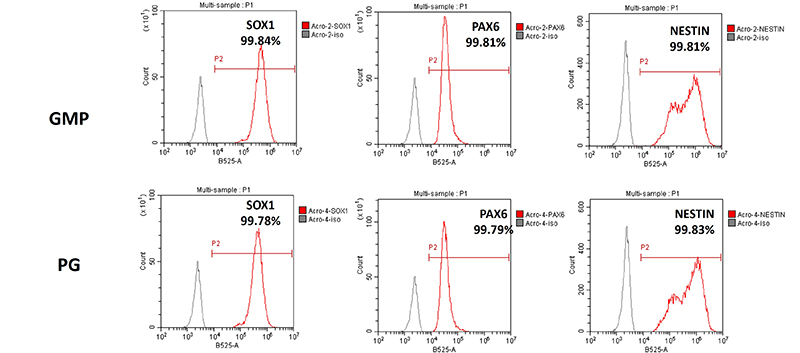
GMP Human Sonic Hedgehog (C24II) Protein (Cat. No. GMP-SH7H13) could induce iPSC derived NPC differentiation, with high expression of NPC markers (PAX6, SOX1, NESTIN) by FACS. This product exhibited similar performance in marker expression with Human Sonic Hedgehog / Shh (C24II) Protein, premium grade (Cat. No. SH7-H5116).
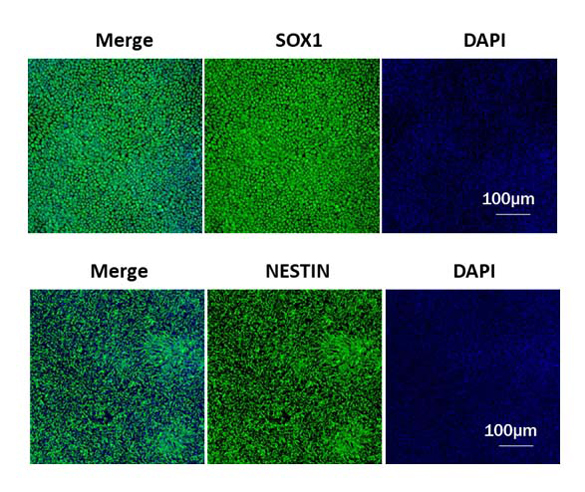
Human Sonic Hedgehog (C24II) Protein, premium grade (Cat. No. SH7-H5116) and Human Noggin Protein, premium grade (Cat. No. NON-H5257) could significantly induce iPSC derived NPC differentiation coating with GMP Human Laminin 521 Protein (Cat. No. GMP-LA5H24), with high expression of NPC markers (PAX6, SOX1, NESTIN) by immunofluorescence.
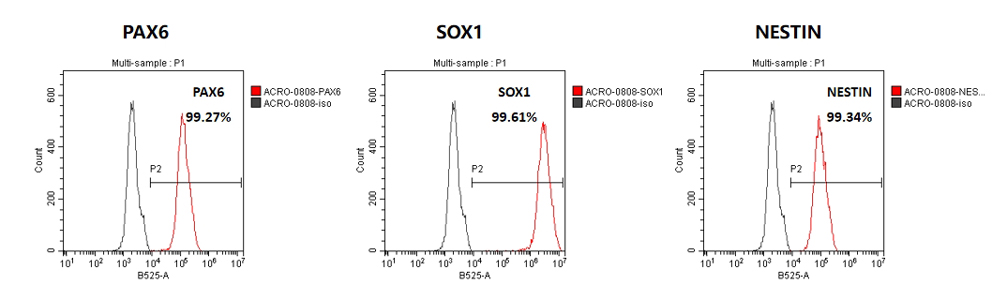
Human Sonic Hedgehog (C24II) Protein, premium grade (Cat. No. SH7-H5116) and Human Noggin Protein, premium grade (Cat. No. NON-H5257) could significantly induce iPSC derived NPC differentiation coating with GMP Human Laminin 521 Protein (Cat. No. GMP-LA5H24), with high expression of NPC markers (PAX6, SOX1, NESTIN) by FACS.
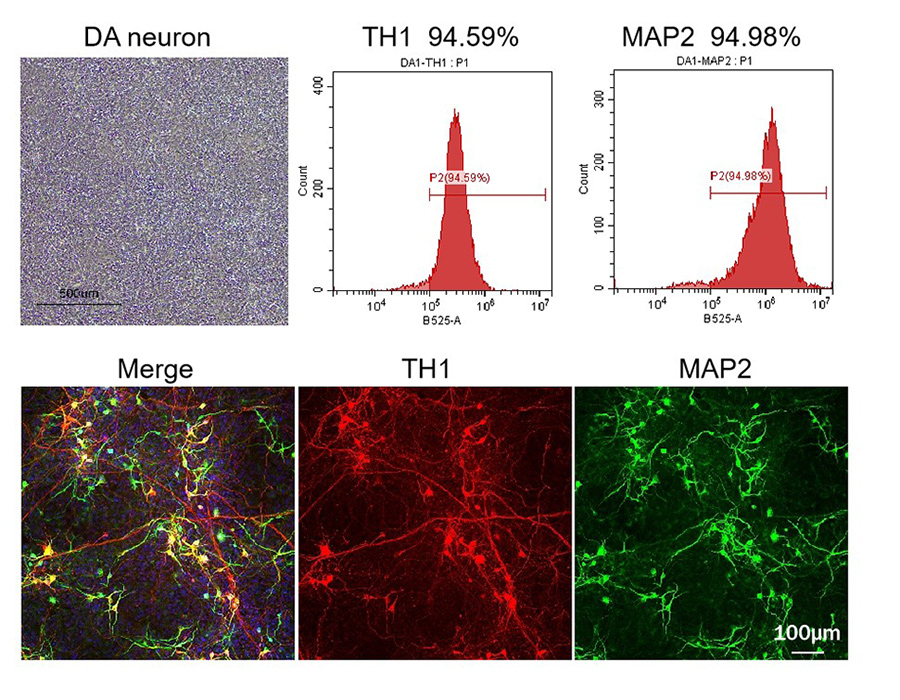
GMP Human FGF-8b Protein (Cat. No. GMP-FGBH16) and Human Sonic Hedgehog (C24II) Protein, premium grade (Cat. No. SH7-H5116) could efficiently induce the neuron progenitor cell into dopaminergic neurons differentiation, highly expressed TH1 and MAP2 in immunofluorescence staining and FACS (Routinely tested).
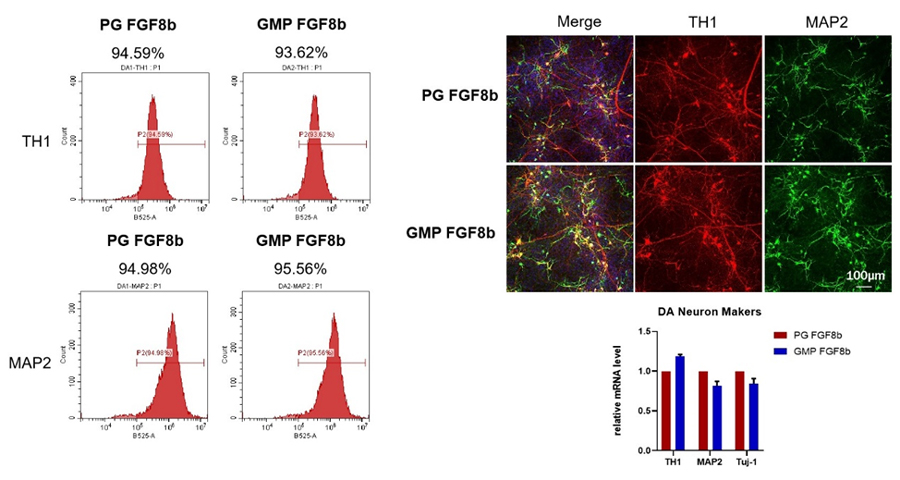
GMP Human FGF-8b Protein (Cat. No. GMP-FGBH16) and Human FGF-8b Protein, premium grade (Cat. No. FGB-H5115) have similar bioactivity to efficiently induce the neuron progenitor cell into dopaminergic neurons differentiation, highly expressed TH1 and MAP2 in immunofluorescence staining and FACS (Routinely tested).
iPSC-Islet Cell

Product List GMP Available
Product Features
GMP Grade Activin A & KGF: Facilitate stem cell differentiation into endoderm, including beta islet cells and other cell types; Ensure reliable, large-scale manufacturing capabilities; Achieve cost efficiency, saving up to 50%.
Animal free production system and various impurities residual detection.
Sterile, no mycoplasma, no exogenous virus.
High batch-to-batch consistency and stability
Support for online and offline audits
Validation Data
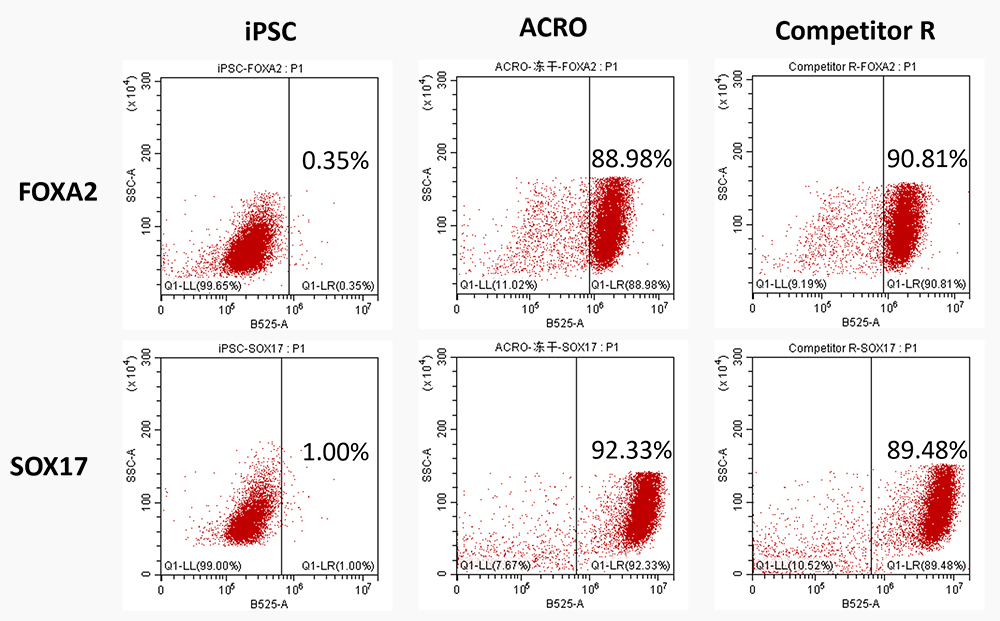
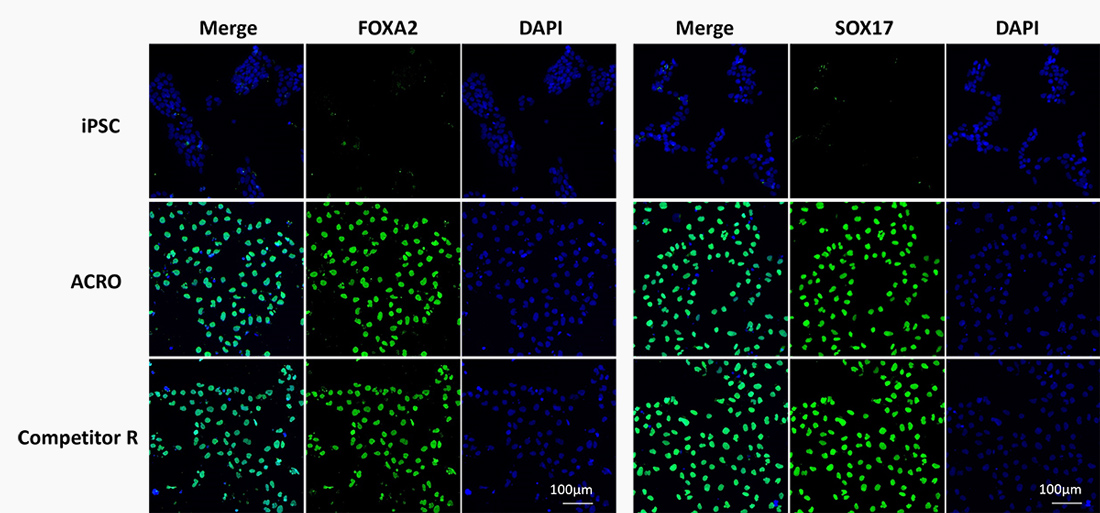
Activin A (Cat. No. GMP-ACAH37) could effectively induce the endoderm differentiation by FOXA2 and SOX17 expression in immunofluorescence and FACS, comparable to Company R.
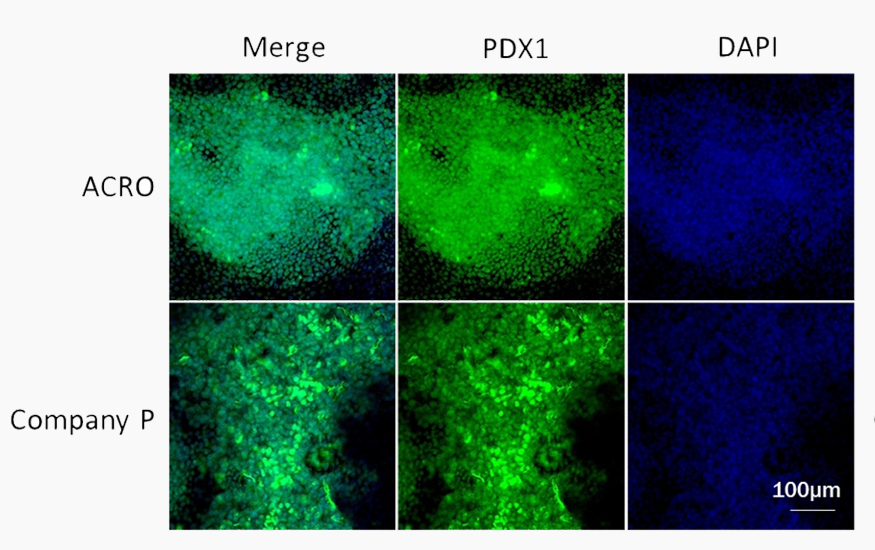
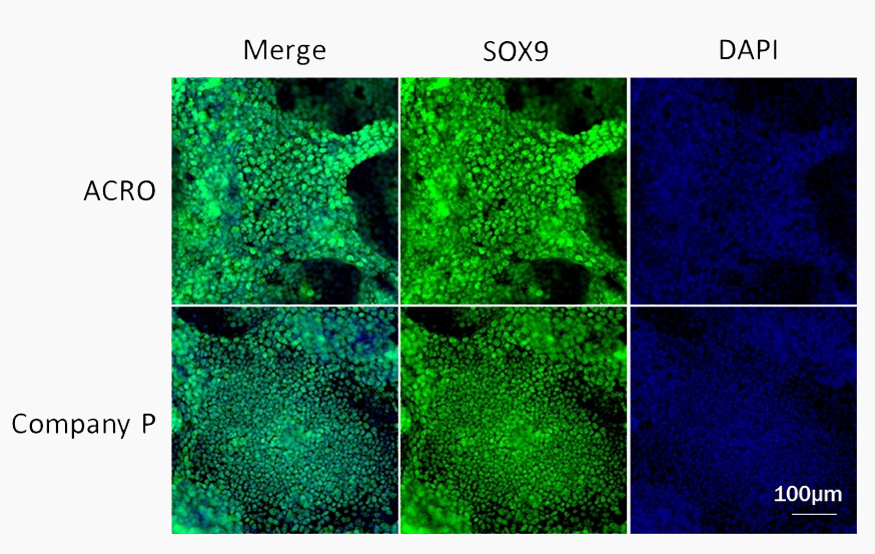
KGF (Cat. No. FG7-H5213) could promote iPSC differentiation into pancreatic progenitor cells, with high expression of PDX1 and SOX9. The bioactivity of KGF is consistent with Company P.
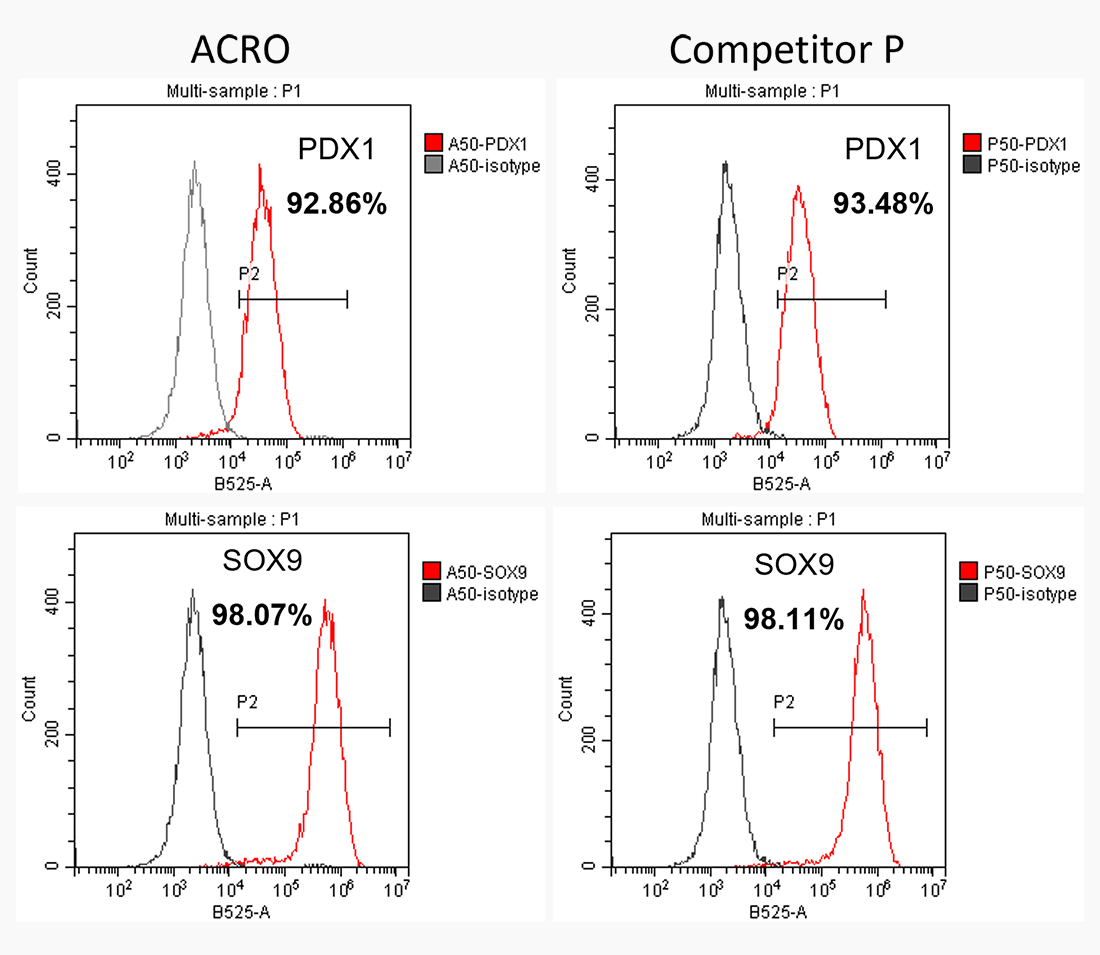
KGF (Cat. No. FG7-H5213) could promote iPSC differentiation into pancreatic progenitor cells.The bio-activity of KGF is consistent with Company P.
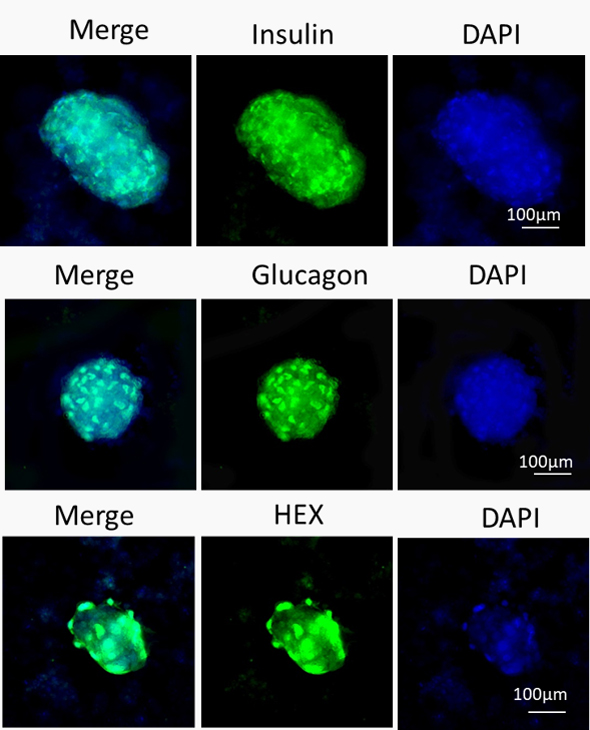
Activin A (Cat. No. GMP-ACAH37) , KGF (Cat. No. FG7-H5213) and FGFb (Cat. No. GMP-FGCH17) could promote iPSC differentiation into mature islet cells with the composition of insulin - producing beta cells, glucagon - secreting alpha cells, and HEK - derived delta cells, optimized to replicate native islet function for effective glucose regulation.
- iPSC-T Cell
- iPSC-NK Cell
- iPSC-Neuron Cell
- iPSC-Islet Cell
iPSC-T Cell
Product List GMP Available
Product Features
GMP Grade DLL4, VCAM1:Eliminate the need of feeder cells in culture systems and support differentiation to T cells
GMP Grade BMP-4: Significantly inducing iPSC derived HSPC differentiation during the process of iPSC differentiation into T/NK cells
Validated activity by iPSC to T cell differentiation
Production and quality control are carried out under strict GMP systems and comply with regulations from multiple countries
Comprehensive quality release verification, with 16 quality control indicators
Enhanced safety (sterile, no mycoplasma, no exogenous virus, animal free production system, and various impurities residual detection)
Pharmaceutical-grade production facility
Support for online and offline audits
Completion of FDA Drug Master File (DMF) registration
Validation Data
BMP4 (Cat. No. GMP-BM4H36), VEGF (Cat. No. GMP-VE5H23), SCF (Cat. No. GMP-SCFH25), TPO(Cat. No. GMP-THNH25) and FGF basic (Cat. No. GMP-FGCH17) could significantly induce iPSC derived HSPC differentiation, with high expression of CD34 and CD45 (HSPC markers) by flow cytometry analysis.
CD34+ CD45+ hematopoietic cells were seeded on GMP Human DLL4 Protein, Fc Tag (Flagship) (Cat. No. GMP-DL4H27) and GMP Human VCAM-1 Protein, Fc Tag (Cat. No. GMP-VC1H25) coated plates and differentiated for 14 days, then flow cytometry was used to detect the expression of T-cell progenitor markers, CD5 and CD7.
GMP Human DLL4 Protein, Fc Tag (Flagship) (Cat. No. GMP-DL4H27) and GMP Human VCAM-1 Protein, Fc Tag (Cat. No. GMP-VC1H25) together with other growth factors could induce the high percentage of CD7+ and CD5+ CD7+ T-cell progenitors formation.
Resources
Webinar playback and appointment

Resource download


Related recommendations
Cytokines residue ELISA kits
IL-2, IL-4, IL-6, IL-7, IL-10, IL-15, IL-21, IL-1B, TNF-alpha, GM-CSF residue kits.
HCD detection
Enzyme residue kit
DNase Activity Assay Kit (Fluorescence)
Mono-growth factor detection
Multiplex detection
FAQ
What are induced pluripotent stem cells (iPSCs), and why are they vital for next-generation cell therapies?
What are the key requirements for iPSC culture and expansion in CMC manufacturing?
How do GMP Human Laminin 521 and Laminin 511 support different PSC culture and expansion workflows?
How does ACROBiosystems assist with regulatory audits for CMC processes?
How does ACROBiosystems support iPSC-based cell therapy from culture to differentiation?
- Background
- Culture and Expansion of iPSCs
- Genome Editing of iPSCs
- Induced Differentiation of iPSCs
- Resources
- FAQ