


 Nov 26, 2026
 Page Views:72


Table 1: Recombinant Protein Structural Formats and Biophysical Configurations
Recombinant Format | Structural Hierarchy | Native Biophysical State | Representative Examples |
|---|---|---|---|
Monomeric Proteins | Tertiary (single chain) | Soluble globular | IL-2, Growth Hormone (hGH), Ubiquitin |
Homooligomers | Quaternary (identical subunits) | Homodimers / Homotrimers | TNFSF ligands (4-1BBL, CD40L), VEGF-A |
Heterooligomers | Quaternary (distinct subunits) | Multi-chain complex | IL-12 (p35/p40), CD3ε/CD3δ, Integrins |
Membrane Proteins | Tertiary to Quaternary | Transmembrane hydrophobic spans | GPCRs (GPRC5D), Claudin-18.2, Ion channels |
Fusion Proteins | Engineered chimeras | Domain-dependent assembly | Fc-fusion receptors, Albumin fusions |
Classification by Structural Architecture
Proteins adopt diverse spatial architectures that dictate their biophysical stability, quaternary assembly, and biochemical function. In recombinant protein engineering, selecting the appropriate structural format is essential to ensure native folding, correct stoichiometry, and biological activity.
Monomeric Proteins
Monomeric proteins consist of a single continuous polypeptide chain that can fold into a tertiary structure. Because they do not require inter-chain assembly, recombinant production often involves a single expression cassette. Monomers represent common formats for single-domain cytokines, peptide hormones, and enzymatic cores.
Homooligomeric Proteins
Homooligomers assemble through the non-covalent or disulfide-linked association of two or more identical polypeptide chains, forming homodimers, homotrimers, or higher-order symmetric oligomers. Subunit oligomerization directly impacts conformational stability, binding avidity, and receptor cross-linking capability. Classic examples include Tumor Necrosis Factor Superfamily (TNFSF) ligands, many of which signal as homotrimers to cluster cell-surface receptors and initiate intracellular signaling.[1]
Heterooligomeric Proteins
Heterooligomers are multi-subunit complexes assembled from two or more distinct polypeptide chains in precise stoichiometric ratios. Producing functional heterooligomers often requires coordinated co-expression and proper inter-subunit assembly. Examples include heterodimeric cytokines (such as IL-12 and IL-23) and multi-chain receptor assemblies (such as CD3E/CD3D heterodimers), where both subunits are required to reconstruct native binding interfaces.[5]
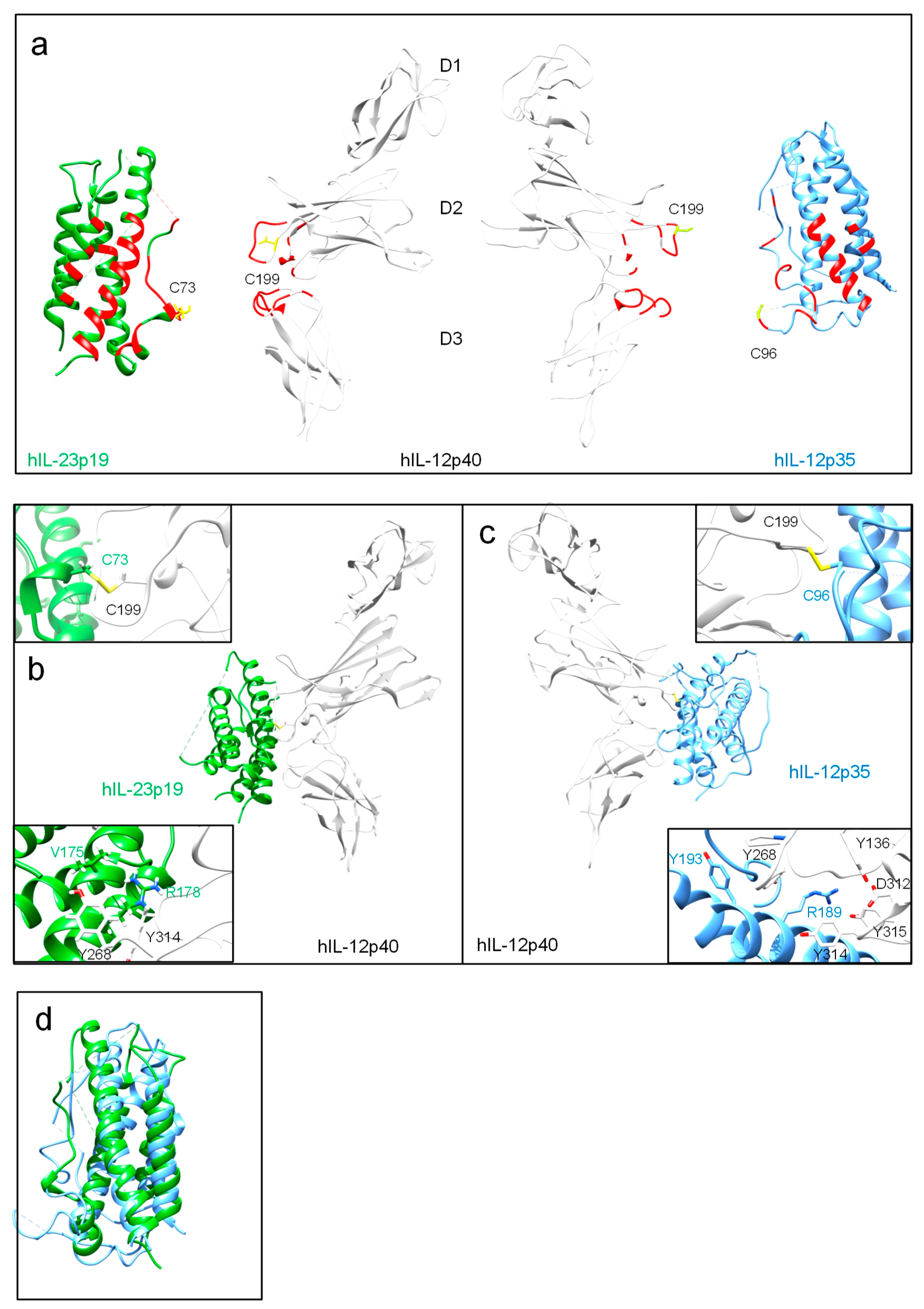
Figure 1. Structural organization of the heterodimeric cytokines IL-12 and IL-23, illustrating their distinct cytokine-specific subunits and shared IL-12p40 subunit.
Source: https://doi.org/10.3390/cells9102184
Membrane Proteins
Membrane proteins contain one or more hydrophobic transmembrane domains that anchor them within lipid bilayers. They function as cell-surface receptors, transporters, and ion channels. In recombinant research, membrane proteins are engineered either as soluble extracellular domains (ECDs) or as full-length membrane proteins stabilized in membrane-mimetic environments (such as lipid Nanodiscs or Virus-Like Particles).[2]
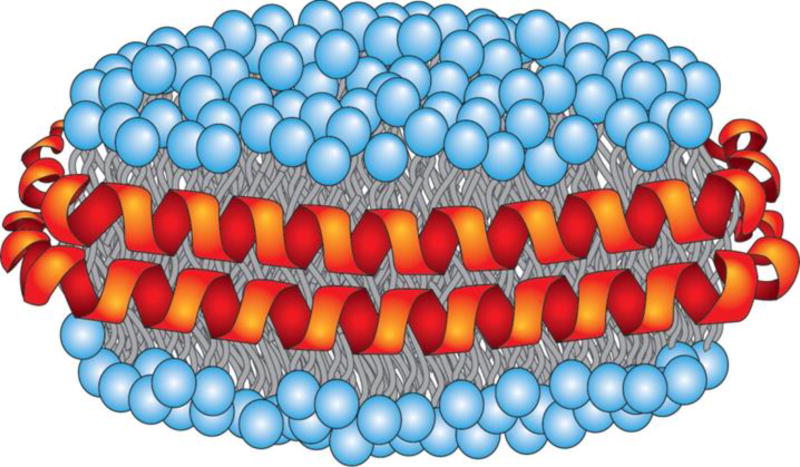
Figure 2. Schematic illustration of a nanodisc composed of a phospholipid bilayer surrounded by membrane scaffold proteins (MSPs).
Source: https://doi.org/10.1021/acs.chemrev.6b00690
Engineered Fusion Proteins
Fusion proteins are chimeric constructs created by genetically linking a target protein sequence to an immunoglobulin Fc region, an affinity tag, a carrier protein, or an enzymatic domain. Fusion strategies can enhance expression solubility, facilitate affinity purification, promote bivalent dimerization, or extend serum half-life.
Classification by Biological Function
Proteins perform diverse catalytic, regulatory, and structural activities in biological systems. Recombinant protein tools are categorized across functional classes to match specific experimental applications.
Enzymes
Enzymes are catalytic proteins that accelerate biochemical transformations with high substrate specificity. Recombinant enzymes include site-specific endoproteases (such as TEV protease and IdeS), protein kinases, phosphatases, nucleases, and metabolic enzymes used for in vitro digestion, assay development, and bioprocessing.
Ligands
Ligands are signaling molecules that bind selectively to cognate cell-surface or intracellular receptors to modulate downstream biological pathways. This category encompasses recombinant cytokines, growth factors, chemokines, and death-receptor ligands that regulate immune responses, cellular differentiation, and tissue homeostasis.
Receptors
Receptors are sensor proteins responsible for molecular recognition and signal transduction. Recombinant receptor targets include immune checkpoint molecules (such as PD-1, CTLA-4, and TIGIT), cytokine receptor subunits, receptor tyrosine kinases (RTKs), and G protein-coupled receptors (GPCRs), serving as primary antigens in therapeutic antibody discovery.
Transcription & Regulatory Factors
Regulatory proteins modulate gene expression, chromatin remodeling, and signal transduction cascades. This class includes recombinant transcription factors, transcriptional co-activators, and intracellular signaling mediators used to study transcriptional regulation and stem cell reprogramming.
Transport & Storage Proteins
Transport proteins bind, carry, and sequester ions, lipids, and small molecules across biological compartments. Recombinant examples include serum albumins, transferrin, and specialized metal-binding proteins utilized in biophysical transport assays and nutrient-delivery studies.
Structural & Extracellular Matrix Proteins
Structural proteins provide mechanical support, cell anchorage, and tissue architecture. This category includes recombinant collagens, fibronectins, and laminin isoforms (such as Laminin 521 and 511) used to establish biomimetic cell culture matrices and organoid microenvironments.
Classification by Research & Experimental Application
Recombinant proteins are engineered to fulfill dedicated functional roles across analytical, cellular, and structural workflows:
Immunogen Design & Antibody Generation
Recombinant proteins serve as defined immunogens for generating monoclonal, polyclonal, and single-domain (VHH) antibodies. These applications demand high purity, authentic post-translational modifications, native tertiary folding, and endotoxin levels appropriate to the intended use to elicit target-specific immune responses.
Antibody Screening & Affinity Characterization
In drug discovery pipelines, recombinant target antigens are utilized for hybridoma screening, phage display selection, ELISA screening, and kinetic binding measurements using Surface Plasmon Resonance (SPR) or Bio-Layer Interferometry (BLI). Oriented and monodisperse targets support reliable kinetic measurements (ka, kd, and KD).[3]
Cell Culture, Expansion & Functional Assays
Recombinant cytokines and growth factors are essential media supplements for ex vivo immune cell expansion (such as CAR-T, CAR-NK, and TIL therapies), stem cell differentiation, and cell-based bioassays. These workflows require verified biological potency and lot-to-lot consistency appropriate to the assay.
Protein Structural Biology
High-resolution structural determination using X-ray crystallography, solution NMR, or Cryogenic Electron Microscopy (Cryo-EM) requires recombinant proteins with sufficient sample homogeneity, verified oligomeric states, and high solubility.
Molecular Interaction & Mechanistic Studies
Recombinant proteins enable the quantitative dissection of protein-protein interactions (PPI), receptor-ligand engagement, and multi-protein assembly kinetics across biophysical and biochemical platforms.
Diagnostic Assay Development & Reference Standards
Recombinant proteins function as solid-phase capture antigens, detection reagents, and calibrated reference standards in clinical diagnostic kits, requiring validated stability profiles and analytical reproducibility.
Conclusion: Aligning Molecular Formats with Experimental Objectives
Recombinant proteins can be systematically classified across structural configurations, biological functions, and translational applications. A single biological target may be engineered into multiple recombinant formats—including full-length proteins, soluble extracellular domains, multimeric assemblies, or Fc-fusions. Selecting the appropriate format requires evaluating native biological topology, experimental assay mechanics, and detection platform requirements.
ACROBiosystems develops comprehensive recombinant protein portfolios covering diverse targets, species, tags, and molecular formats across cytokines, growth factors, receptors, immune checkpoints, enzymes, and membrane protein complexes. Depending on the product, analytical purity, oligomeric state, binding, and cellular activity data can support their use as reliable molecular tools tailored to specific research applications.