
Recombinant Monoclonal Anti-TPBG Antibody, Rabbit (P1B10)

1/5
+2 View all
Cat. No. / Size
Price
Availability
Qty
HGS-M2717-20ul
$135.00
In Stock - Delivery in 2-3 weeks
HGS-M2717-100ul
$400.00
In Stock - Delivery in 2-3 weeks
Sub-Total:
$ 0
0
Add to Cart
  • Product Details
  • Performance Data
  • Reviews & Citations
  • Important Statement
  • Resources
Source

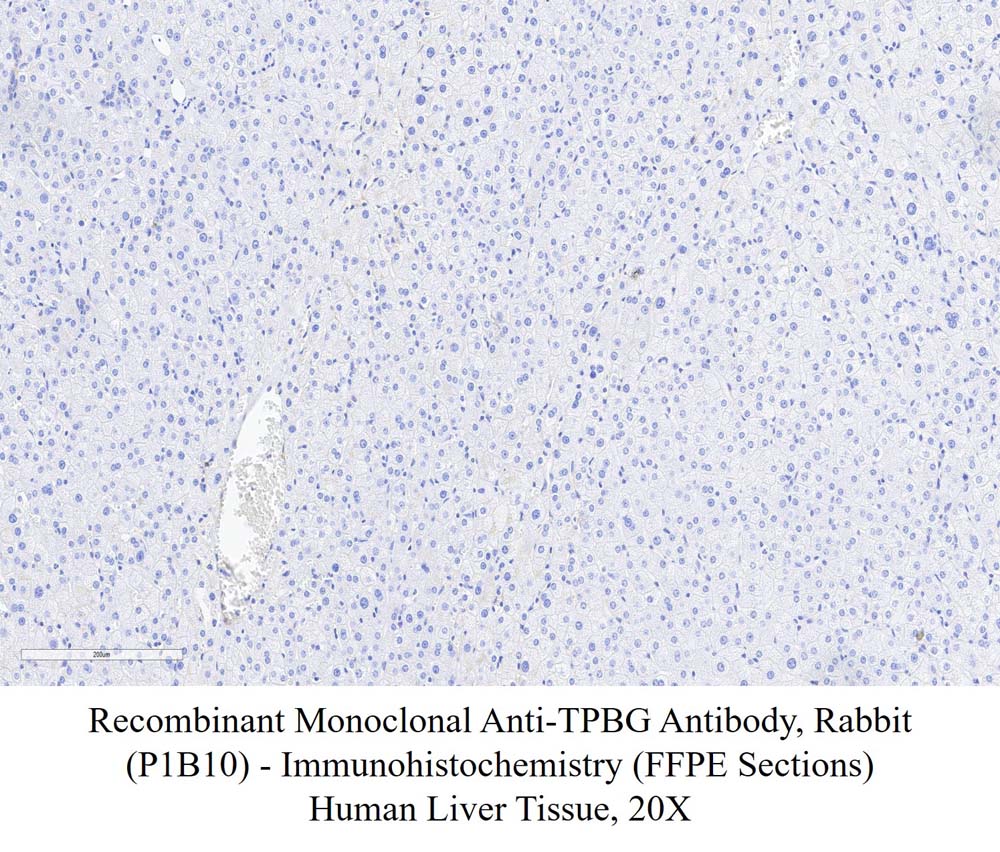
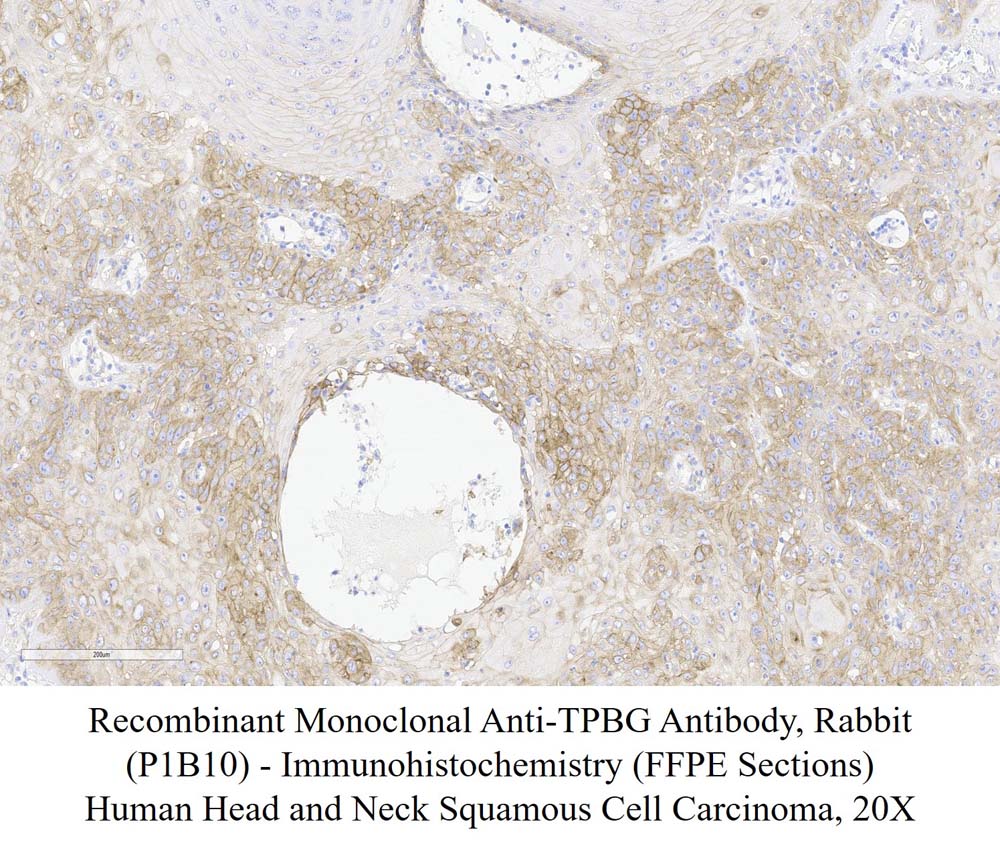
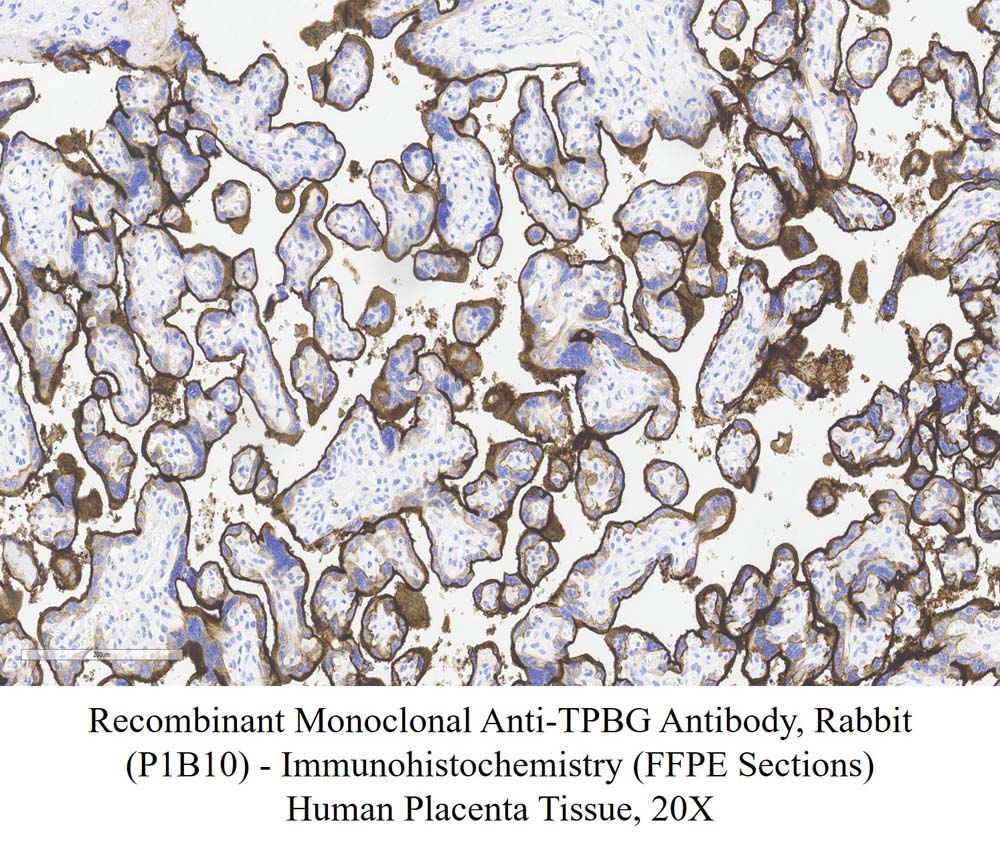
Recombinant Monoclonal Anti-TPBG Antibody, Rabbit (P1B10) is a TPBG primary antibody for IHC application.

Antibody Type

Recombinant Monoclonal

Clone

P1B10

Isotype

Rabbit IgG, Kappa

Host Species

Rabbit

Reactivity

Human

Specificity

React with TPBG protein on the membrane of target cell/tissue.

Application
Application
Recommended Use
IHC-P
1: 200-1: 1000

* Recommended dilutions are for reference only. Optimal working concentrations may vary depending on your consumables, reagents, and assay conditions. We recommend optimizing for your specific system. No warranty is made regarding performance at any specific dilution.

Purification

Protein A purified

Aggregation

Less than 5%, as determined by SEC-MALS.

Concentration

0.9~1.1 mg/ml

Form

Liquid

Formulation

Supplied a 0.22 μm-filtered solution in PBS containing 40% Glycerol, 0.03% Proclin 300 and 0.05% BSA, with Trehalose as protectant.

Please contact us for customized product forms or formulations.

Shipping

Liquid product is shipped at blue ice.

Storage

Please avoid repeated freeze-thaw cycles.

This product is stable after storage at:
  • 2°C to 8°C for 14 days;
  • -20°C to -70°C for 12 months.
Notices

Product Specific Notices: For research use only.
Background

TPBG is a leucine-rich transmembrane glycoprotein that is specific to trophoblast cells and is associated with cell adhesion. It is an oncofetal antigen that is highly expressed in many tumor cells in adults. TPBG protein localizes to the plasma membrane, cell surface, nucleoplasm, and axon terminus, and its expression is high in the endocrine system and respiratory system, with additional high expression in the proximal digestive tract. Clinically, TPBG is associated with poor outcome in numerous cancers, such as non-small cell lung cancer, breast cancer, colorectal cancer, cervical cancer, gastric cancer, kidney cancer so on.

ACRO Scientific Leadership Award

Supporting the scientists driving cell & gene therapy forward

Apply Now