



 COA


- Product Details
- Performance Data
- Reviews & Citations
- Resources
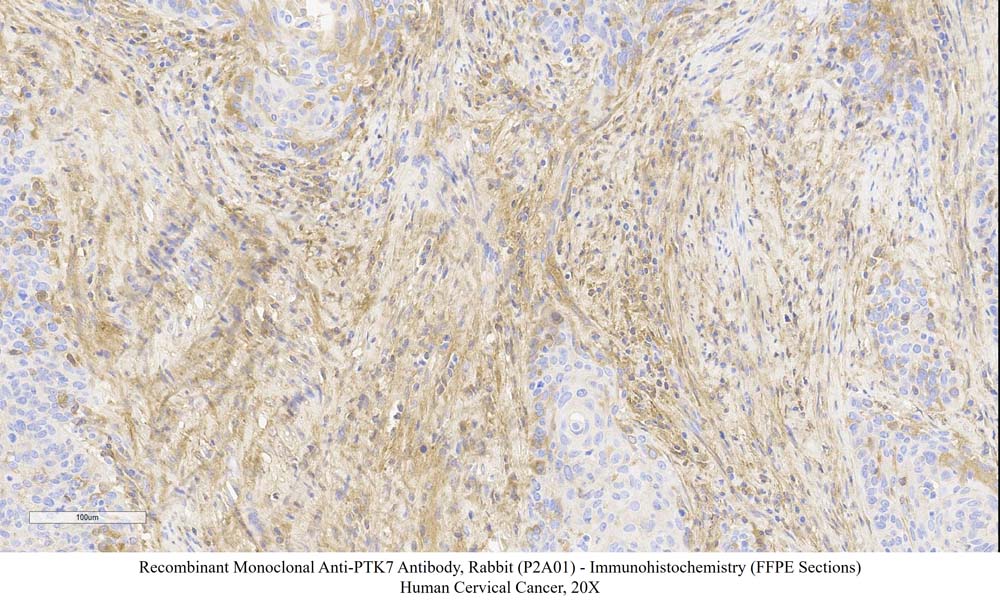
1/4
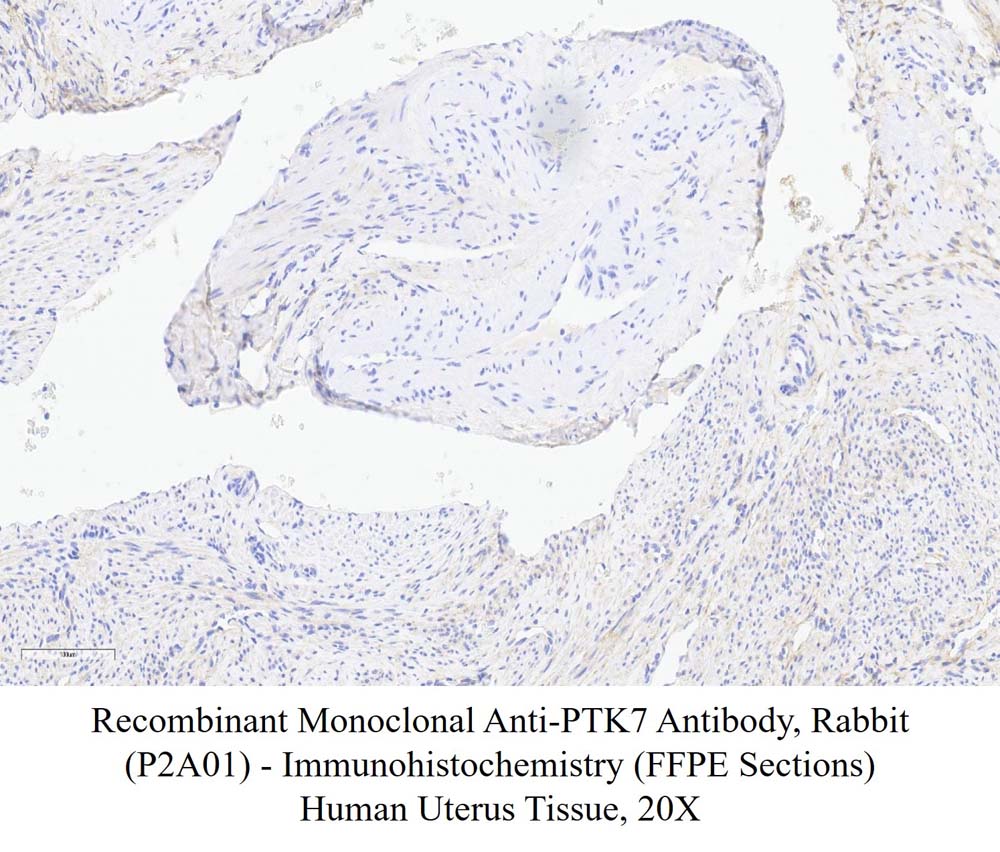
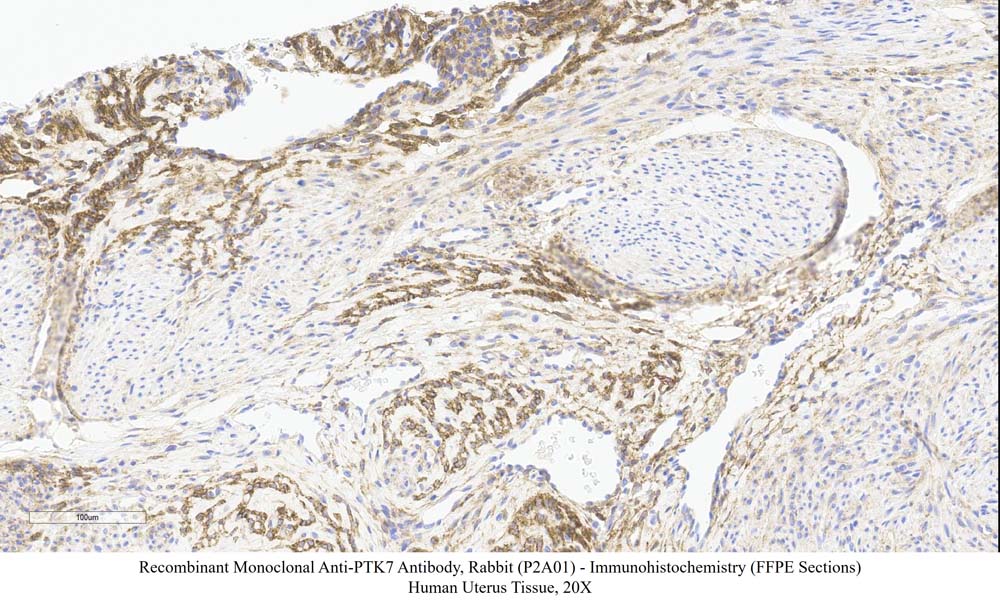
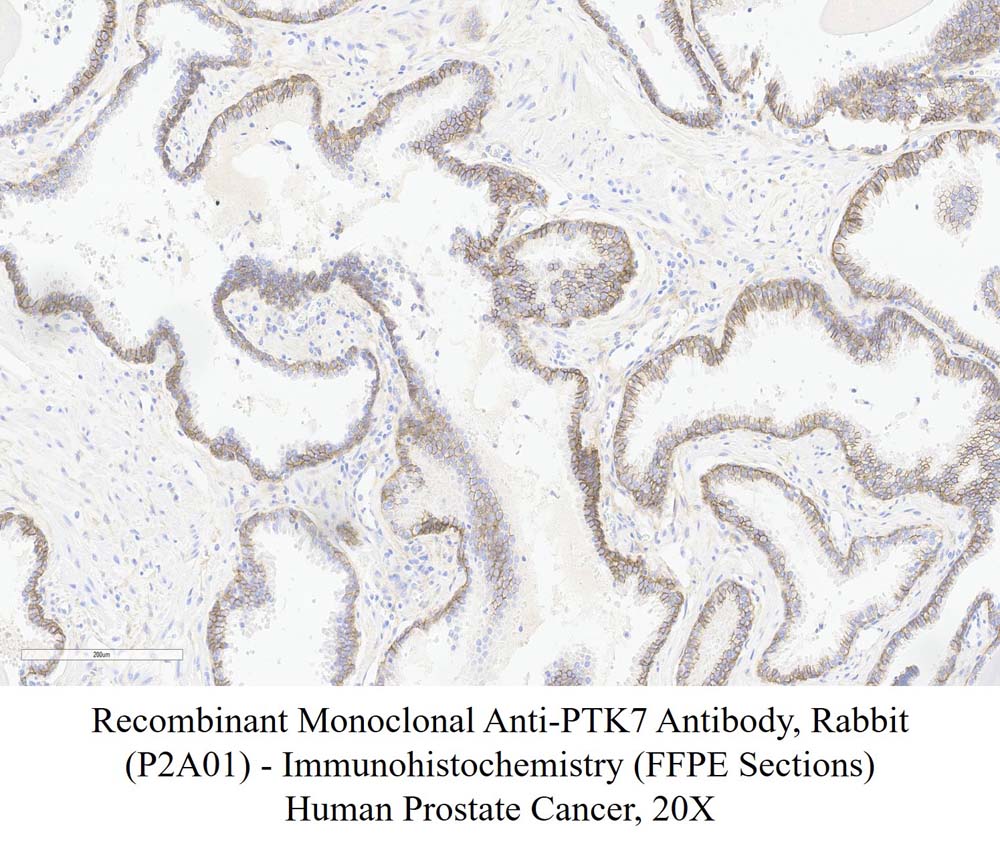
Recombinant Monoclonal Anti-PTK7 Antibody, Rabbit (P2A01) is a PTK7 primary antibody for IHC application.
Recombinant Monoclonal
P2A01
Rabbit IgG, Kappa
Rabbit
Human
React with PTK7 protein on the membrane of target cell/tissue.
Application | Recommended Use |
IHC-P | 1: 100 - 1: 500 |
* Recommended dilutions are for reference only. Optimal working concentrations may vary depending on your consumables, reagents, and assay conditions. We recommend optimizing for your specific system. No warranty is made regarding performance at any specific dilution.
Protein A purified.
Less than 10%, as determined by SEC-MALS.
0.9~1.1 mg/ml
Liquid
Supplied a 0.22 μm-filtered solution in PBS containing 40% Glycerol, 0.03% Proclin 300 and 0.05% BSA, with Trehalose as protectant.
Please contact us for customized product forms or formulations.
Liquid product is shipped at blue ice.
Please avoid repeated freeze-thaw cycles.
Product Specific Notices: For research use only.