High-Sensitivity Recombinant Factor C (rFC) Endotoxin Testing for Pharmaceutical and Biologics Quality Control
 Publication Date:2026-06-01
 Page Views:4229

Why Endotoxin Testing Remains Critical in Biopharmaceutical Manufacturing
Bacterial endotoxin testing remains one of the most critical quality control requirements in pharmaceutical, biotechnology, and medical device manufacturing. Endotoxins, also known as lipopolysaccharides (LPS), are structural components of the outer membrane of Gram-negative bacteria such as Escherichia coli. Even trace amounts of endotoxins introduced into the bloodstream can trigger severe pyrogenic reactions, inflammatory cytokine release, hemodynamic instability, and, in extreme cases, septic shock.
As advanced biologics, cell and gene therapies, vaccines, and complex injectable formulations continue to expand, the industry faces growing pressure to implement endotoxin detection methods with higher sensitivity, greater specificity, improved consistency, and stronger regulatory alignment.
Traditional Limulus Amebocyte Lysate (LAL) assays have long served as the industry standard for bacterial endotoxin testing. However, increasing concerns surrounding horseshoe crab–derived reagents, β-glucan interference, reagent variability, and sustainability have accelerated the transition toward recombinant endotoxin testing technologies.
Among these innovations, Recombinant Factor C (rFC) assays are emerging as a next-generation solution for high-sensitivity endotoxin detection in modern pharmaceutical quality control workflows.
Understanding the Challenges of Endotoxin Detection
Endotoxins present unique analytical challenges due to their structural complexity and environmental stability.
The biologically active Lipid A region of LPS is responsible for triggering strong innate immune responses through Toll-like receptor 4 (TLR4) activation. During bacterial growth, lysis, or environmental stress, endotoxins are released into surrounding solutions and manufacturing environments.
Unlike many microbial contaminants, endotoxins exhibit:
• High thermal stability
• Strong surface adsorption
• Aggregation behavior in aqueous systems
• Resistance to conventional sterilization procedures
Complete endotoxin inactivation often requires depyrogenation conditions exceeding 250°C, significantly more rigorous than standard sterilization protocols used for microbial control.
Additionally, endotoxins can form heterogeneous aggregates depending on pH, ionic strength, surfactants, and protein composition. These characteristics complicate endotoxin recovery and increase the risk of analytical variability during testing.
As biologics manufacturing processes become increasingly complex, highly sensitive and interference-resistant endotoxin detection methods are essential for reliable quality assurance.

Fig 1. Gram-negative bacteria have two membranes: an inner membrane and an outer membrane, with the outer membrane containing endotoxin (LPS).
Evolution of Bacterial Endotoxin Testing Methods
Rabbit Pyrogen Test
Historically, pyrogen testing relied on the Rabbit Pyrogen Test (RPT), which measures fever responses following intravenous sample administration.
Although biologically relevant, the method suffers from several limitations:
• Low throughput
• Poor quantitative precision
• High variability
• Significant ethical concerns
• Limited suitability for modern biopharmaceutical manufacturing
These limitations drove the development of in vitro endotoxin testing technologies.
Limulus Amebocyte Lysate (LAL) Assay
The LAL assay revolutionized endotoxin testing through the use of horseshoe crab blood lysate. Endotoxins activate a coagulation enzyme cascade initiated by Factor C, enabling highly sensitive endotoxin detection.
LAL assays remain widely used because of their:
• High sensitivity
• Established regulatory acceptance
• Broad historical validation
However, traditional LAL technologies also present important challenges:
• Dependence on horseshoe crab harvesting
• Lot-to-lot variability
• Supply chain sustainability concerns
• Susceptibility to β-glucan interference through Factor G activation
• Increased complexity in testing biologics and complex matrices
These limitations have accelerated industry interest in recombinant endotoxin testing solutions.
Recombinant Factor C (rFC): A Next-Generation Endotoxin Testing Technology
Recombinant Factor C assays represent a major advancement in bacterial endotoxin testing.
Rather than relying on animal-derived lysate, rFC technology uses genetically engineered recombinant Factor C proteins that specifically bind endotoxin molecules. Upon endotoxin recognition, the assay generates a fluorescent signal proportional to endotoxin concentration.
Because rFC selectively activates the Factor C pathway while eliminating Factor G–mediated reactions, the method offers significantly improved specificity compared with traditional LAL assays.
Key advantages of recombinant Factor C testing include:
• Animal-free reagent production
• Reduced β-glucan interference
• Improved batch-to-batch consistency
• Enhanced sustainability
• Greater analytical specificity
• Simplified global supply chain management
As regulatory agencies and pharmacopeias increasingly support recombinant technologies, rFC is rapidly becoming a preferred solution for modern endotoxin testing applications.

Fig 2. Comparison Between Traditional LAL and Recombinant Factor C (rFC) Endotoxin Testing Workflows
Regulatory Acceptance of Recombinant Factor C Endotoxin Testing
Global regulatory support for recombinant endotoxin testing has expanded significantly in recent years. Regulatory Milestones Include:
• European Pharmacopoeia Chapter 2.6.32 recognizing rFC as an independent method
• USP <86> formally permitting recombinant reagents for endotoxin testing
• The Japanese Pharmacopoeia has also advanced recombinant endotoxin testing through comparative studies and expert committee evaluations.
High-Sensitivity rFC Endotoxin Testing Solution
ACROBiosystems' Recombinant Factor C Endotoxin Testing Kit (Cat. NO. RES-A056) represents a significant advancement in endotoxin testing technology. Developed through proprietary platform technology, this endpoint fluorescence determination kit delivers exceptional performance that meets the stringent demands of pharmaceutical, medical device, and biological product manufacturing.
Key Performance Features
• Industry-leading sensitivity, detecting endotoxin levels from 0.005 - 5 EU/mL
• High concordance with traditional LAL methods across multiple sample types
• Superior specificity, effectively eliminating β-glucan interference
• Fast assay completion in under an hour
• Fully compliant with USP and international regulatory standards
• Exceptional batch-to-batch consistency driven by recombinant technology
Scientifically Validated Performance
The Recombinant Factor C Endotoxin Testing Kit 's performance has been rigorously validated against industry standards. Comparative studies show detection results consistently within two-fold of LAL methods for various samples, including biological products and injectable drugs. Unlike traditional LAL approaches, the rFC method demonstrates no cross-reactivity with β-glucans even at high concentrations (10 μg/mL), ensuring reliable results free from common interferences.
- Standard Curve
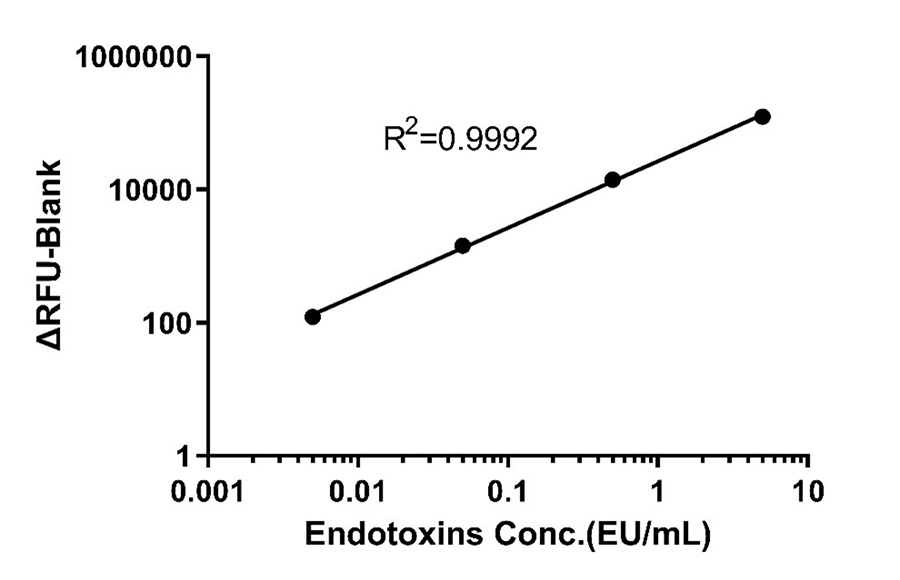
Fig 3. Take the logarithm of the concentration of the Endotoxin working standard solution as the abscissa, take the ΔRFU as the ordinate. Fitting the standard curve with linear model, and the correlation coefficient R should be ≥ 0.98.
- High sensitivity, with results comparable to the LAL method

Fig 4. Different methods were used to detect endotoxin residues in four samples, and the deviation between the detection results of rFC method and LAL method is within 2 times.
- High Specificity
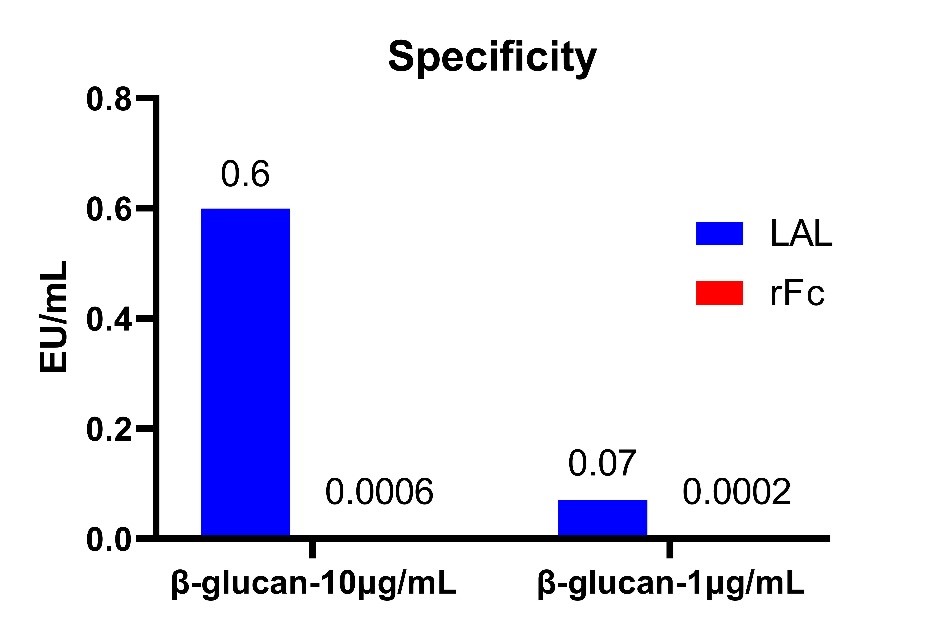
Fig 5. The rFC method was employed to detect endotoxin residues in β-glucan at concentrations of 10ug/mL and 1ug/mL. No non-specific signals were detected. In contrast, the dynamic chromogenic method used for β-glucan detection resulted in the detection of endotoxin and non-specific signals. This indicates that recombinant factor C does not react with β-glucan, demonstrating the good specificity of the rFC method.
Future Outlook: The Transition Toward Recombinant Endotoxin Testing
As the pharmaceutical industry continues transitioning toward advanced biologics and sustainable manufacturing practices, recombinant endotoxin testing is expected to play an increasingly central role in quality control.
For modern biopharmaceutical manufacturers, high-sensitivity rFC testing represents more than a replacement technology—it represents a strategic advancement in endotoxin control, regulatory compliance, and long-term manufacturing sustainability.
Hot Products
> SAFENSURE™ Advanced Safety Testing Solution for Biologics
> Universal Protein A Quick ELISA Kit (Boiling-free)
> Mycoplasma Rapid Detection Kit
> E1A&SV40LTA resDNA Quantitation Kit
> E. coiI resDNA Quantitative Kit
 Popular ArticlesRelated RecommendationsPopular Events
 CD8 in Immunotherapy: CAR-T Engineering, in vivo CAR, and CD8-LNP Applications2026-06-01Page Views:136
 Driving Innovation, Empowering Partners: ACROBiosystems Showcases Comprehensive CGT Solutions Anchored by GMP Capabilities at Bio Korea 20262026-06-01Page Views:125
 BCMA-Targeted Therapies: CAR-T Success, Emerging Immunotherapy Platforms, and Future Trends2026-05-28Page Views:119
 Why CAR-T Works in Blood Cancers but Struggles in Solid Tumors2026-05-27Page Views:261
 Universal CAR Detection Solutions: Broad Compatibility, Higher Efficiency!2026-05-25Page Views:319




![[Free Sample] Universal Fluorescent Anti-VHH Antibody — Precise Detection of VHH-Based CAR Expression](https://console.acrobiosystems.com/uploads/demo/2026/06/02/Anti-VHHAntibodySmallbanner.jpg)
 Related Products